
Begin a Hopewell Property Records Search
Every Hopewell property search starts with a key. An address works well in CivQuest Atlas. A parcel number travels better, though. It survives street renamings and spelling quirks. Grab the legal description too before you hop between systems.
Pair the assessor view with the recorded instrument for a solid first pass. The Real Estate Assessment Office keeps ownership records plus the taxable and exempt land books. The Circuit Court Clerk records deeds and other land instruments. The Treasurer handles bills and payments. GIS adds parcel context on the map. A property search answers focused questions. It does not replace a title examination or a boundary survey.
- Search the Hopewell CivQuest Atlas page by address, parcel number, legal description, or map.
- Keep the returned parcel and owner details, then compare a recent transfer in the Virginia Circuit Court land-record index.
- Use the Treasurer’s payment gateway for a current bill or balance, allowing for processing lag.
- Open Hopewell GIS for zoning, flood, contour, ward, and other map context.
- Ask the Clerk or the relevant city office for records that are not available through the public page.
Offices Behind Hopewell Property Records
Hopewell functions as its own county-equivalent records jurisdiction. Prince George County is separate, even when a mailing address says Hopewell. The offices below split the local record trail. For contacts, the municipal directory lets you search by person, title, or department, and it lists assessor, GIS, Planning and Development, permits, and Treasurer staff.
Hopewell Circuit Court Clerk
100 E Broadway, Room 251
Hopewell, VA 23860
804-541-2239
Real Estate Assessment
City ownership, assessment, and land-book records
Hopewell, VA 23860
804-541-2234
Hopewell Treasurer
Real estate bills, balances, and payments
Hopewell, VA 23860
804-541-2240
Hopewell GIS
Parcel, zoning, land-use, and flood layers
Hopewell, VA 23860
804-541-2230
Hopewell Replaced qPublic with CivQuest
A June 26, 2026 news release named CivQuest Atlas as Hopewell's new property-search and mapping platform. qPublic is no longer the official entry point, the city says. The official Hopewell Property Search page links to CivQuest. It confirms searches by address, parcel number, legal description, and map.
The page names those search keys in text. It does not display every live result field. Open the parcel card in the live tool before treating any label as settled. That step matters most when you need a map result to match a recorded deed exactly. The map result must match the recorded deed.
| Address | A practical first key for a known Hopewell property. |
|---|---|
| Parcel number | A cross-reference to the map and roll; the exact local format still needs live verification. |
| Legal description | Helpful for older lots or an address that does not resolve. |
| Map | Finds a parcel visually; adjacent-selection tools are not confirmed. |
The official Hopewell property-search landing page shows the CivQuest switch and the accepted routes. Reach the current search from there, then save the parcel key before changing systems.
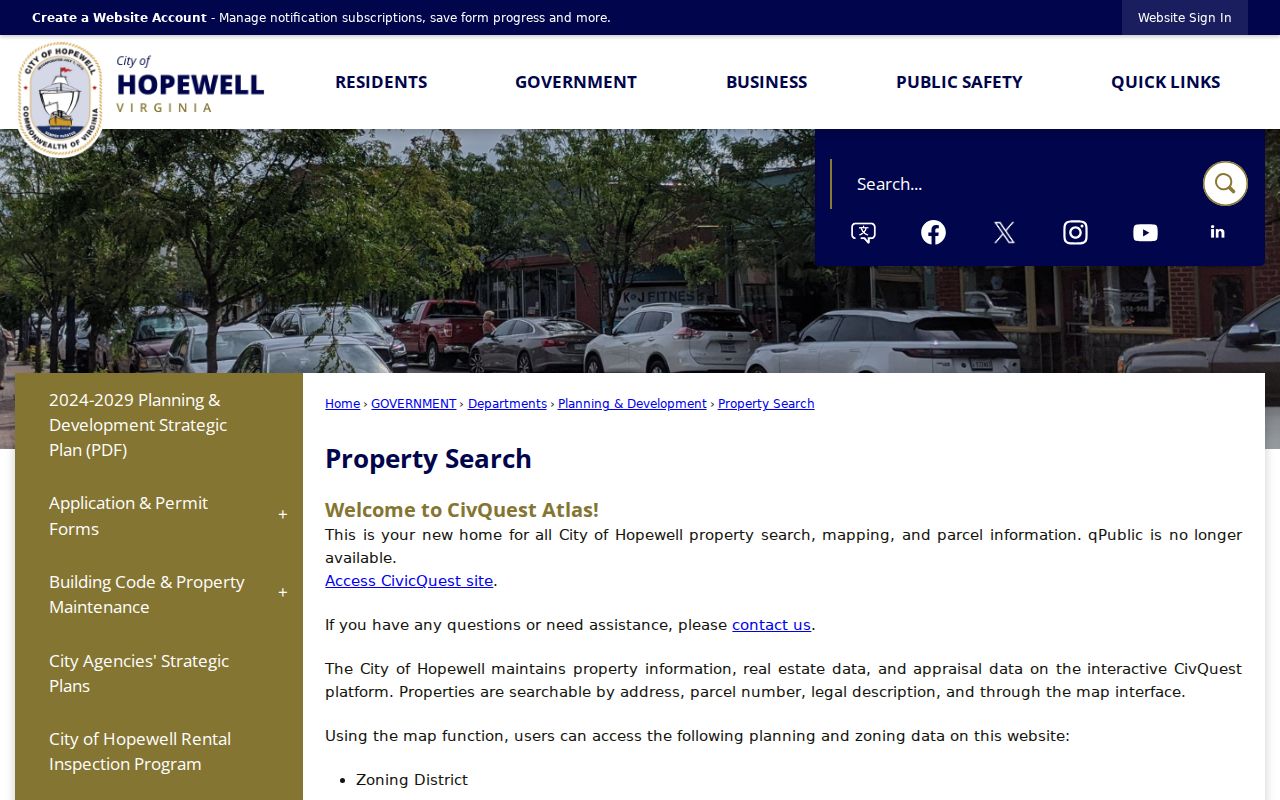
The landing page documents the accepted search paths. Confirming exact card fields still takes a live parcel selection.
Hopewell Property Records Follow a Two-Year Cycle
The Real Estate Assessment Office maintains ownership data and processes construction, renovation, and demolition changes. It also administers special programs, supports appeals, and prepares the yearly taxable and exempt Land Books. The official assessment page gives January 1, 2025 as the last reassessment. January 1, 2027 is the next. That cycle explains the rhythm. The roll is an assessment record, not a real-time closing feed.
Hopewell also lists dated real-estate files covering 2018 through 2022. Those help with older comparisons. Their presence does not mean every year in between is downloadable. Nor does a file replace a current parcel lookup. The Land Book page says one taxable book and one exempt book are created each year. Each is then delivered to the Clerk, the Board of Equalization, and the Treasurer.
Keep the year attached to every figure. A prior appraisal, a current tax amount, and a sale price answer different questions. When an owner change matters, compare the assessment result with the latest recorded deed.
The city's Land Book information page describes the yearly books and where copies go. It works well as a reference for that distribution.
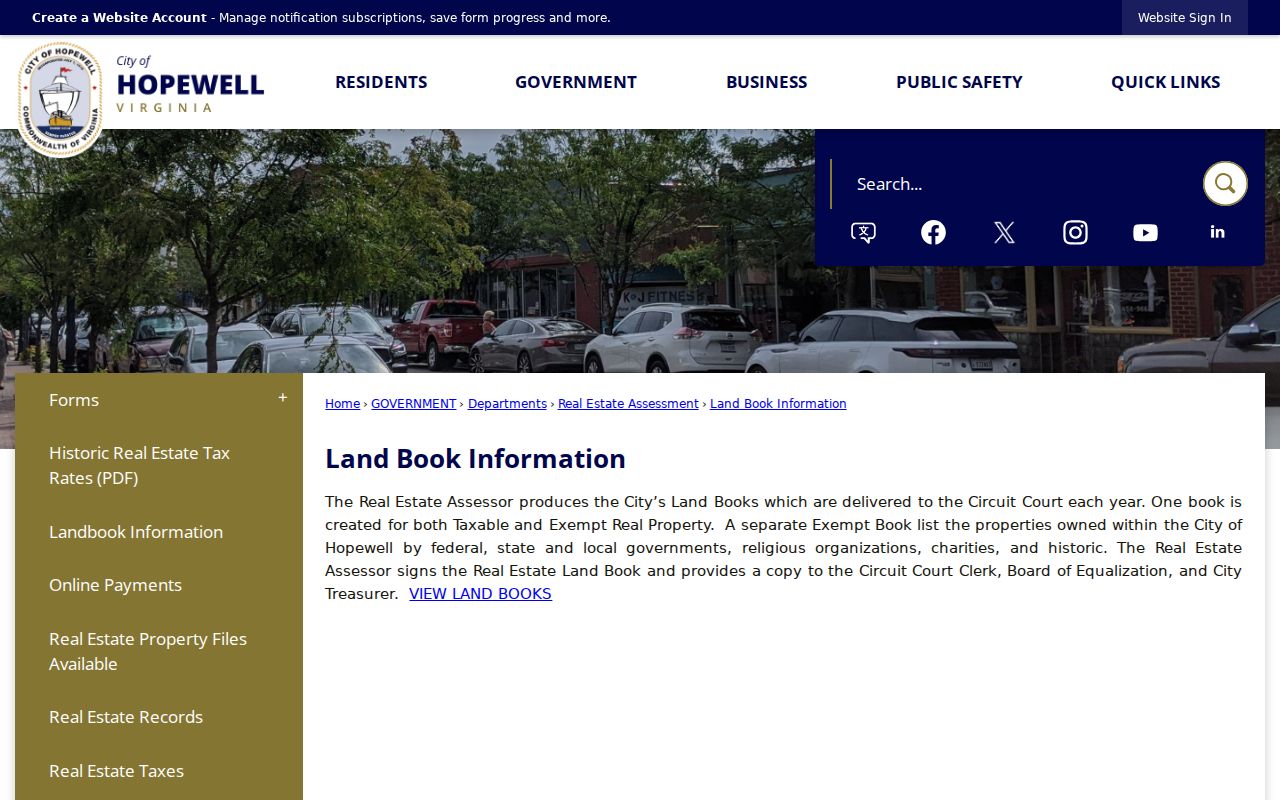
Three offices receive the books each year. That means a roll entry can be compared across the local tax workflow without assuming every screen refreshes at the same moment.
Hopewell Property Records by Record Type
One parcel can show up in several Hopewell property records, and each was built for a different job. The assessment roll names an owner for tax purposes. The deed is the recorded conveyance. The Treasurer tracks the tax bill, GIS supplies map context, and Planning and Development keeps land-use approvals and permit forms. A single property search rarely answers every question.
| Record Type | What It Documents | Kept By | Access |
|---|---|---|---|
| Deeds and deeds of trust | Transfers and recorded security interests | Circuit Court Clerk | SRA index where enabled; image access may require a subscription |
| Liens, releases, and plats | Claims, satisfactions, and legal lot references | Circuit Court Clerk | Virginia SRA or Clerk counter |
| Assessment and Land Books | Owner, land and improvement values, taxable and exempt entries | Real Estate Assessment | CivQuest and annual book information |
| Tax bills and balances | Amounts due, payments, penalties, and interest | Treasurer | Citizen Self-Service; processing may lag |
| Parcels and map layers | Parcel location, zoning, flood, contours, wards, and context | GIS / CivQuest | Public viewer; custom maps or data may have a fee |
| Permits and land use | Applications, site plans, zoning, subdivisions, and historic review | Planning and Development | Forms and office inquiry; no address-keyed public case search located |
Use the Clerk's index when the question is a transfer or lien. Use assessment and Treasurer records for value and tax status. Use the plat or GIS map to orient the parcel. Do not use it to settle a line dispute. The detailed Hopewell deed-records process and Hopewell tax-record lookup walk through those separate trails.
Hopewell Deeds Separate Index from Images
Hopewell deeds live in the Circuit Court Clerk's records. Virginia Secure Remote Access is the statewide doorway to participating land-record indexes. Where a clerk enables it, index-only searching may be free. Images work differently. They require an authorized subscription, a signed agreement, and payment. The landing page does not spell out Hopewell's search fields or result cap. It also omits the deed-type menu, image cutoff, and oldest online year. Treat those as open questions rather than inferring them from the city's record history.
The Clerk's office sits at 100 E Broadway, Room 251, Hopewell, VA 23860. Listed hours run 8:30 a.m. to 4 p.m. Call 804-541-2239 with questions about access or copies. The office holds deeds, plats, wills, and judgments. It also keeps financing statements, notary records, and marriage and divorce records. If the web index stops short of a record, ask the Clerk. You can request an in-person search or the copy process. The Virginia Courts SRA page explains the split between index-only and subscriber image access. It is not a screenshot of a Hopewell result.
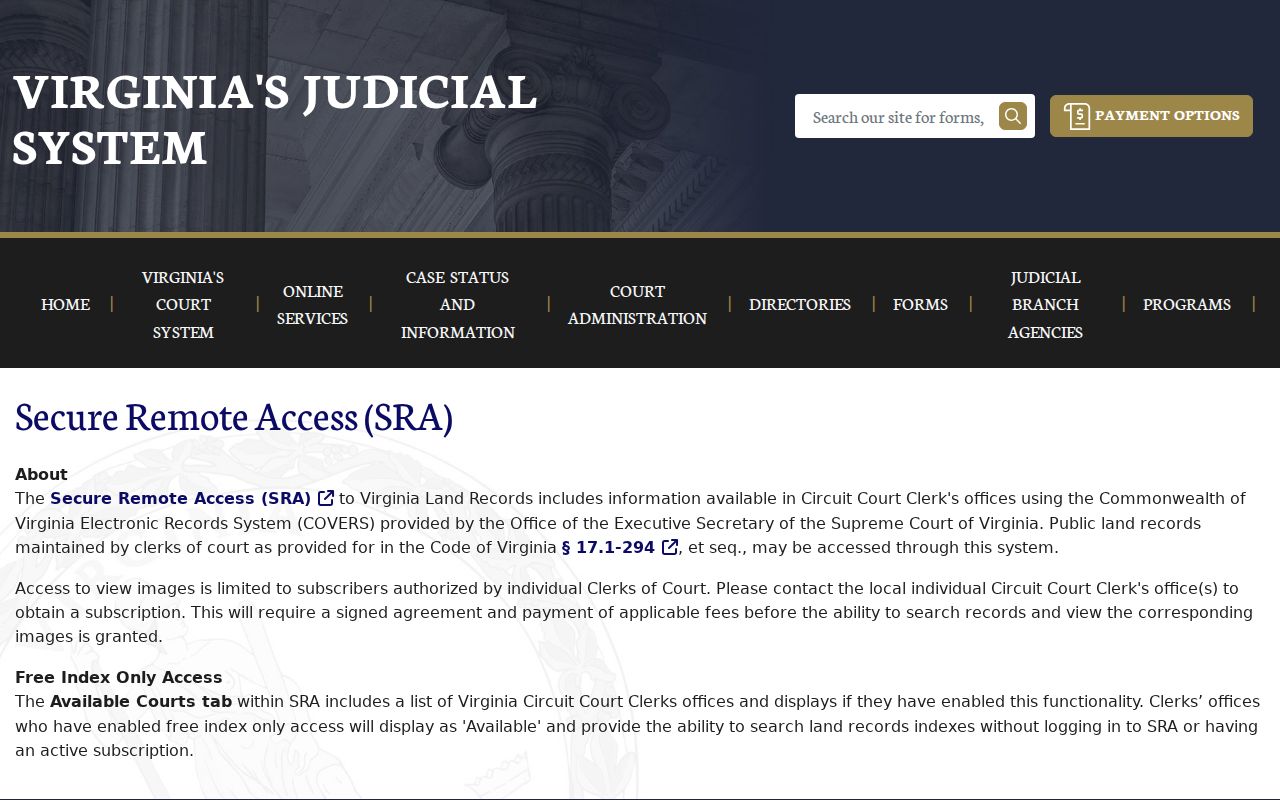
Check the SRA court list to see whether Hopewell access is enabled. Then confirm the current image rules before planning a deed search.
Hopewell Property Tax Records Use Two Installments
Hopewell real-estate tax follows a published formula. The 2025 rate is $1.17 per $100 of assessed value. Assessment times rate equals the annual tax. Two installments are due each year. The dates are June 15 and December 5. Miss one, and a one-time 10 percent penalty follows. Interest at 10 percent per year starts the month after the due date, according to the rate page.
The Treasurer's Citizen Self-Service gateway is the route for bills, balances, and payments. One caution matters there. An online balance may lag a payment or adjustment that has not finished processing. For a large or time-sensitive amount, confirm with the Treasurer at 804-541-2240. A delinquent balance alone does not prove a tax sale or foreclosure happened. The City's tax-rate page shows the rate formula and installment dates, which helps explain why a bill shifts when an assessed value or rate changes, but it is not a record of market value.
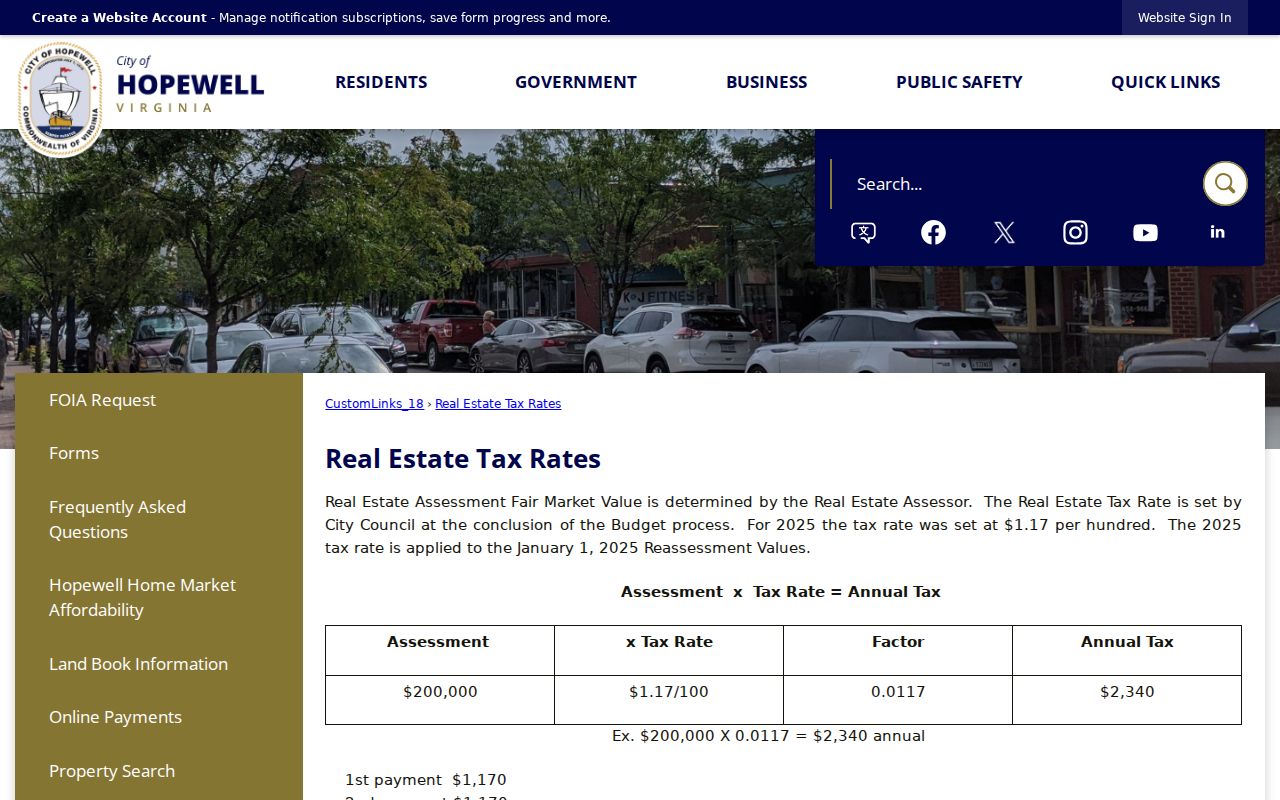
For payment status, use the Treasurer’s separate gateway and allow for processing time.
Hopewell GIS Has More Than Seventy Five Layers
Hopewell GIS maintains more than 75 layers. The property-search page names zoning districts, contours, FEMA flood-hazard areas, Chesapeake Bay Protection Areas, enterprise zones, and wards. The GIS information page adds aerial imagery, ownership and tax references, land use, utility locations, roads, natural features, topography, and other man-made or environmental layers. That depth helps frame a parcel question. The viewer can help locate a parcel. It can also flag a question for the right city office.
Data may carry a fee. The Hopewell GIS page says maps and data may be available for purchase. Its lines are not a survey. A flood layer is not a final engineering or insurance determination either. Citing Va. Code §54.1-402, the city warns against relying on mapped lines, improvements, topography, and contours as boundary evidence. The Hopewell GIS information page points to the layer and data-access service. Use it to pick overlays for inspection. Then check the recorded plat or ask the relevant City office for an authoritative answer.
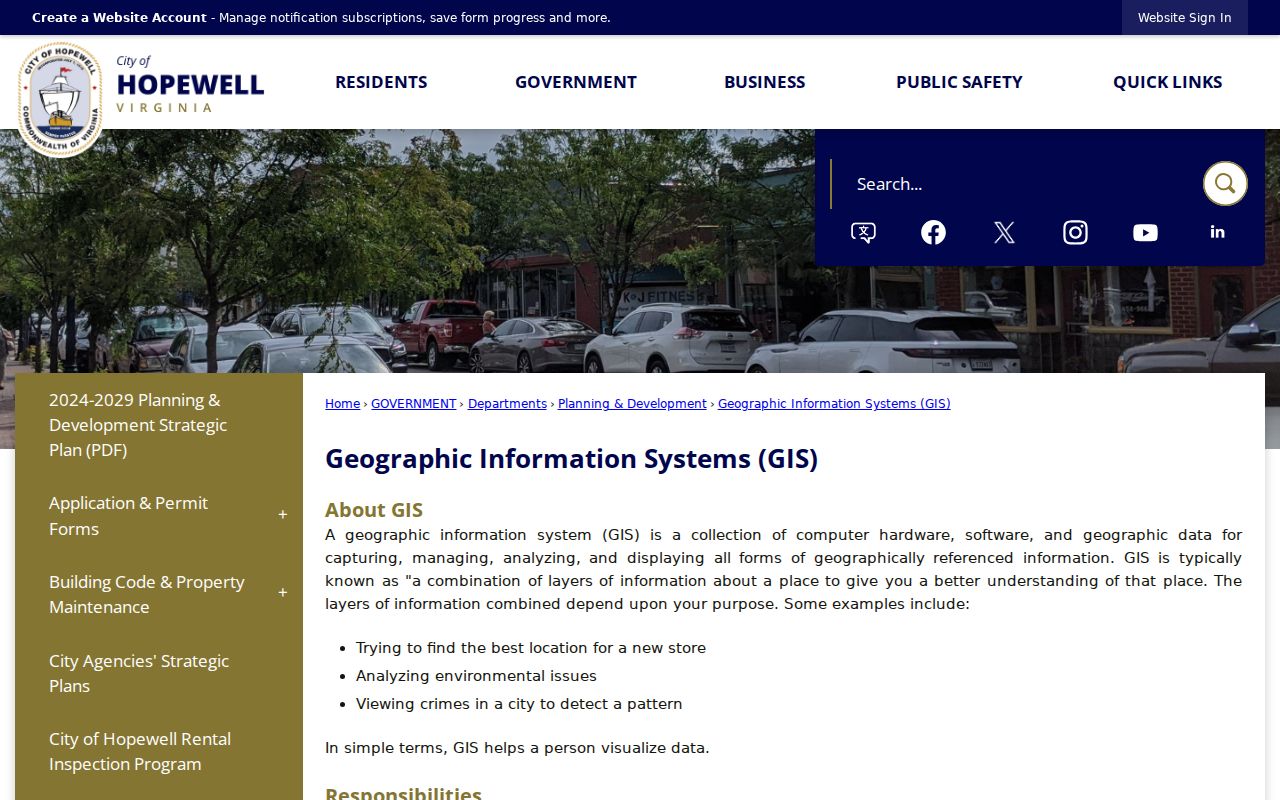
A selected layer adds context to the parcel. It does not change the legal description or establish a boundary.
Hopewell Property Records Cross Earlier Locality Lines
Hopewell's boundaries have moved several times. The Library of Virginia dates the city's incorporation to 1916. City Point was annexed in 1923. Further annexations from Prince George County came in 1952 and 1969. That matters for deed chains. A description written before an annexation may name Prince George County even though the site now sits inside Hopewell.
Keep the legal description beside the current address. Search the present Hopewell index first. Then follow earlier descriptions into the relevant Prince George County deed books for transfers before the annexation. The locality history sets a date frame; the deed and plat show the actual transfer and lot. The two are separate search jurisdictions now. A mailing city or ZIP should not choose the record office by itself. The Library of Virginia locality page is a useful starting point for this chronology.
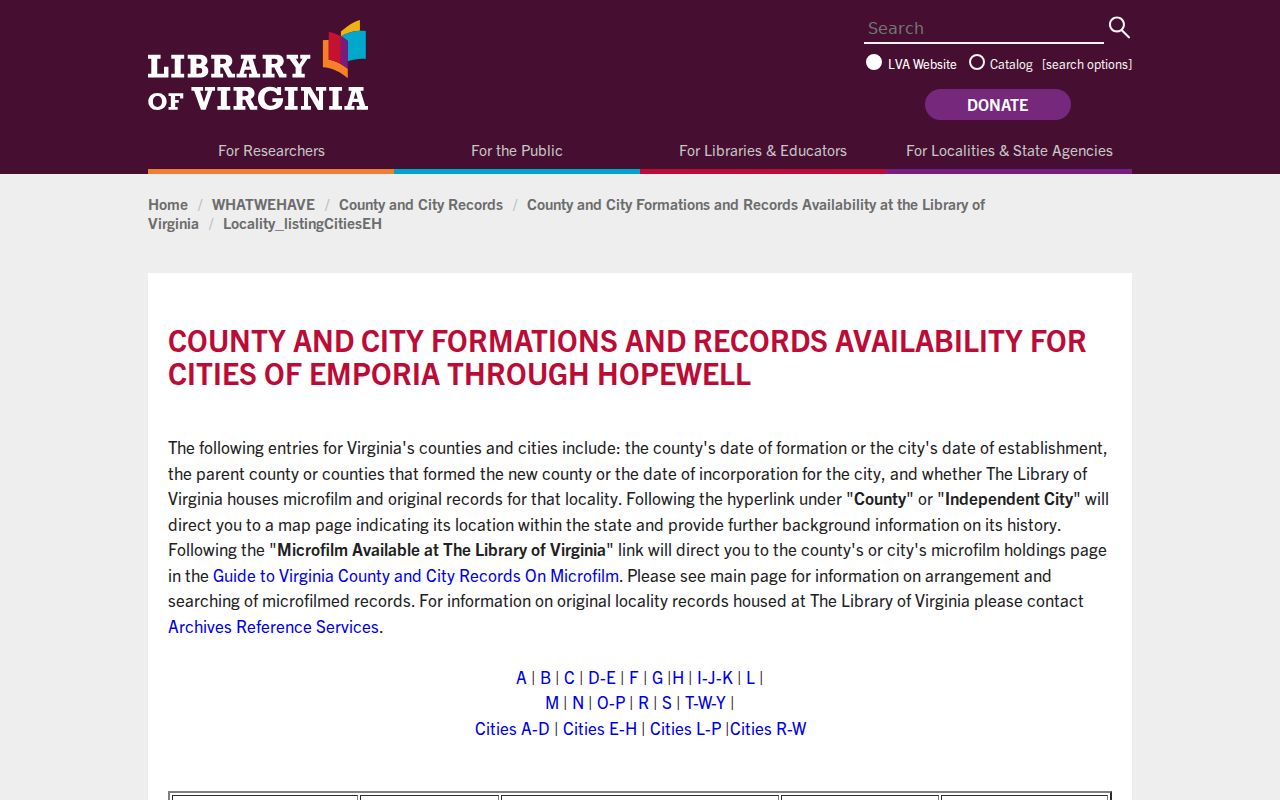
Use the annexation dates to decide when a search should extend into older county indexes.
City Point and Downtown Shape Hopewell Property History
City Point sits where the James meets the Appomattox. The city describes it as an eighteenth-century port. It also served as a Union headquarters area during the Civil War. Archaeological evidence points to occupation reaching back roughly 8,500 years. A modern address here can sit within port, plantation, military, or archaeological context. A deed and plat tell only part of the story.
Downtown Hopewell grew differently. It expanded with DuPont-era industrial development before and during World War I. The city's historic-district account notes a 1915 fire followed by brick rebuilding. That date helps explain why a current commercial building may post-date an older parcel chain. It does not show that the fire destroyed courthouse records.
Two districts carry design review. City Point TH-1 and Downtown B-1 have local controls. Exterior work visible from a public street or alley generally needs a Certificate of Appropriateness. The certificate comes from the Architectural Review Board. The COA application carries no fee. Check the district before planning any visible exterior work. Hopewell's historic-district page shows the two local designations and their review context.
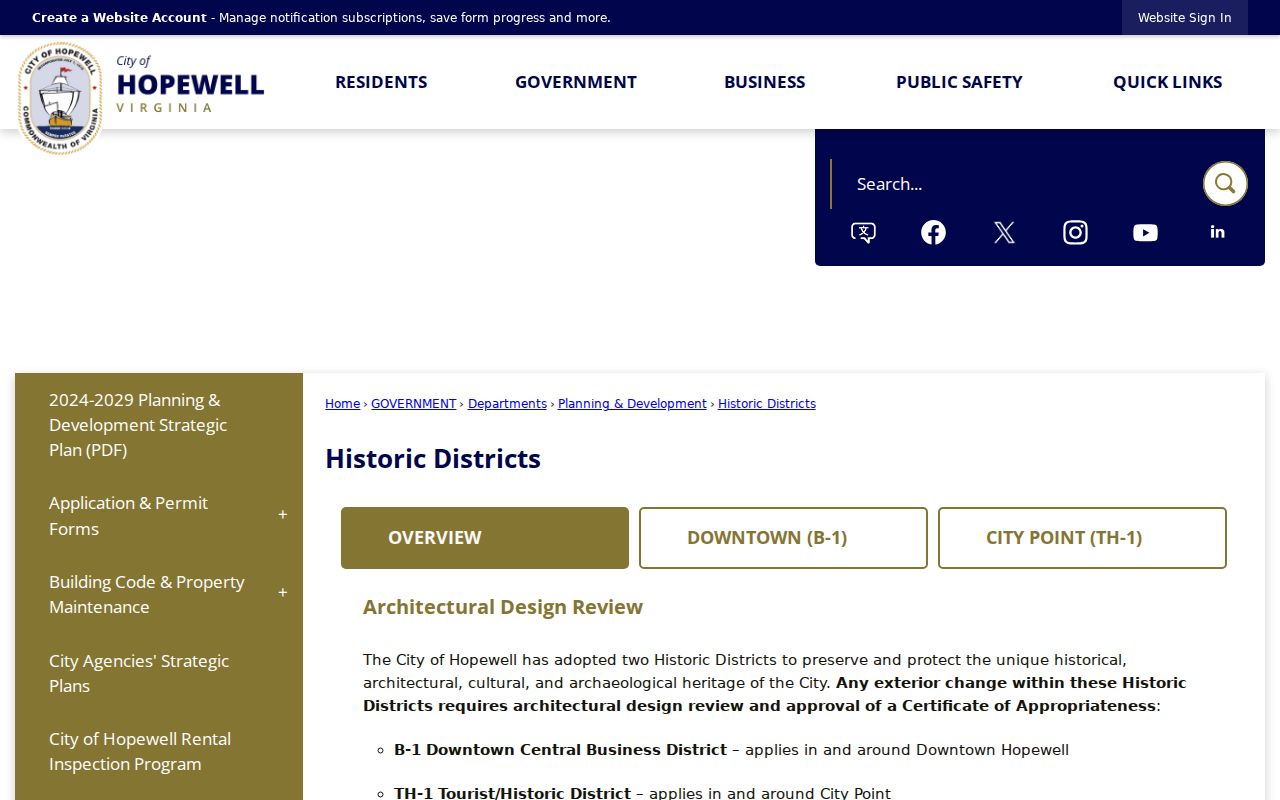
A historic district layer can enrich a deed trail in Hopewell, but it never becomes a title claim. District status guides planning.
Hopewell VADeed Alert Watches for Later Filings
Hopewell property owners gained a new safeguard. The Circuit Court Clerk launched VADeed Alert, according to a July 8, 2026 news release. The tool watches for recordings that match a subscriber's name. An alert goes out after an instrument is recorded. It cannot stop a filing, validate one, or undo an instrument. It is no substitute for a backward-looking fraud investigation. Think of it as a tripwire, not a shield. A signup page from Virginia Courts explains the subscription process and what the alert covers. It remains a notification tool rather than a replacement for reading the recorded document itself.
If an unexpected deed notice arrives, use the Clerk's published phone number. You can also use the official Virginia Courts address. Treat any unsolicited letter demanding payment for a copy or urgent protection with suspicion. The Clerk's office can confirm whether an instrument sits in the official record. Timing matters here. A recently recorded deed may be newer than the assessment roll. Hopewell reassesses property on a biennial cycle. The owner of record and the tax bill can lag behind the deed records.
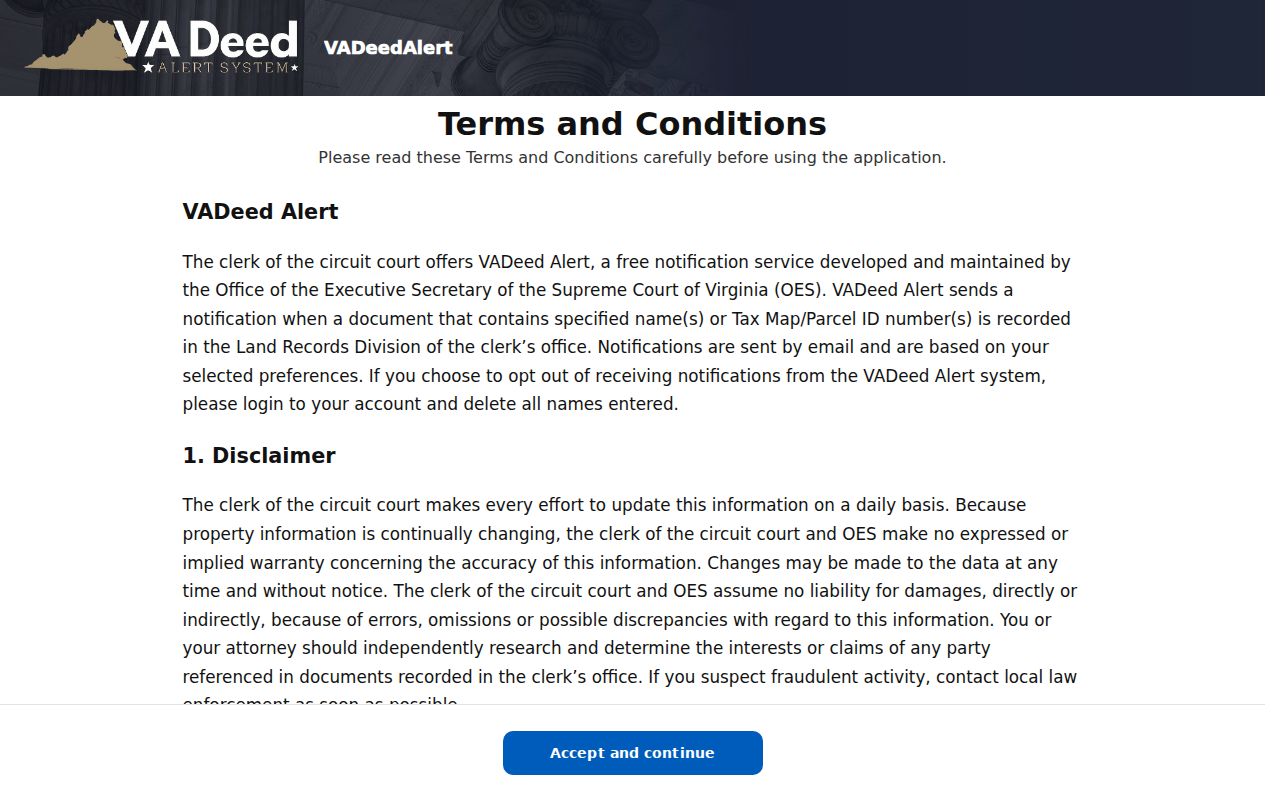
Read any alert against the Clerk’s official deed index and instrument image access rules.
Virginia FOIA Covers Hopewell City Records Requests
A Hopewell index may lack the record you need. Virginia's Freedom of Information Act opens another door. Va. Code §2.2-3704 asks that a requester describe the records with reasonable specificity. The public body has five working days to respond. The response delivers the records or a written explanation. That written response may cite withholding, partial access, nonexistence, or impracticability. An extension of seven workdays is allowed when genuinely needed. Costs cannot exceed actual reasonable charges for access, search, duplication, and supply. A cost estimate pauses the response clock. A deposit can be required once projected charges pass $200.
FOIA has limits of its own. It does not force creation of a new record. It will not assemble a custom dataset to answer a question. Aim each request at the custodian who holds it. That may be the Clerk, the assessment office, GIS, the Treasurer, or Planning and Development. For land records, SRA and the Clerk are the direct routes. For a map product, GIS is the right office. A FOIA request works well when a public record simply is not posted. It is not a way to make the city prepare a title opinion.
Limits of Hopewell Property Records
Every Hopewell property record has an edge to it. An assessment owner is not a title opinion. A GIS line is not a survey. A tax assessment reflects the tax roll, not a sale price or a market appraisal. A court docket may hint at a dispute, but the underlying order or recorded instrument holds the detail. Compare the deed, the appraisal, and the plat against each other, and ask the custodian whenever a field or date seems unclear.
Lawful use. Use Hopewell property records for property history, ownership confirmation, tax questions, and civic research. Do not use owner details to stalk, harass, or intimidate another person.