
What a Hopewell City Current Owner Record Shows
The City's assessment search is the practical first stop for the present owner of record. Hopewell moved its property-search service from qPublic to CivQuest Atlas on June 26, 2026. The City's own instructions support searching by address, parcel number, legal description, and map. They do not confirm an owner-name search. Start with the property address or a parcel identifier pulled from a tax bill. When the transaction date matters, compare the owner and situs details against the recorded instrument itself. Match them to the recorded instrument itself.
| Owner of record | The name associated with the parcel in the assessment record; verify legal title against the deed. |
|---|---|
| Vesting | The deed’s wording for how title is held. The live CivQuest result fields were not independently confirmed. |
| Tax mailing address | The address used for assessment and tax notices, which may differ from the property’s location. |
| Situs address | The location assigned to the parcel, not proof of who occupies it. |
| Recorded instrument | The deed reference and date establish the public transfer trail at the Clerk. |
| Current as of | Check the data date and deed date; assessment updates do not necessarily post at the same moment as recording. |
An owner of record is whoever the public ownership record names. That is not a renter, a relative, a caretaker, or any other occupant. The mailing address exists so the City can send tax notices. It is no promise the owner lives there. Treat the City record as an index to the parcel. Then read the latest deed to see the grantee. Note any estate or entity named in the conveyance. A mismatch can simply mean processing lag, a changed mailing address, or a move into a trust or company.
The City presents its CivQuest property-search page as the entry point for assessment and parcel searches. The landing page explains the search transition. Individual field labels and refresh timing may vary. So treat any assumed field list as a comparison checklist rather than a guarantee of what appears online.
Hopewell's dated real-estate property-file page offers downloadable files spanning 2018 through 2022. Those historical files can explain an older record. They are no substitute for a current parcel lookup. A file can be accurate for its stated year yet miss a later sale or correction. The page's date range is the warning to heed.
The City's CivQuest search landing page marks the live assessment and parcel-search route for finding a current owner record.
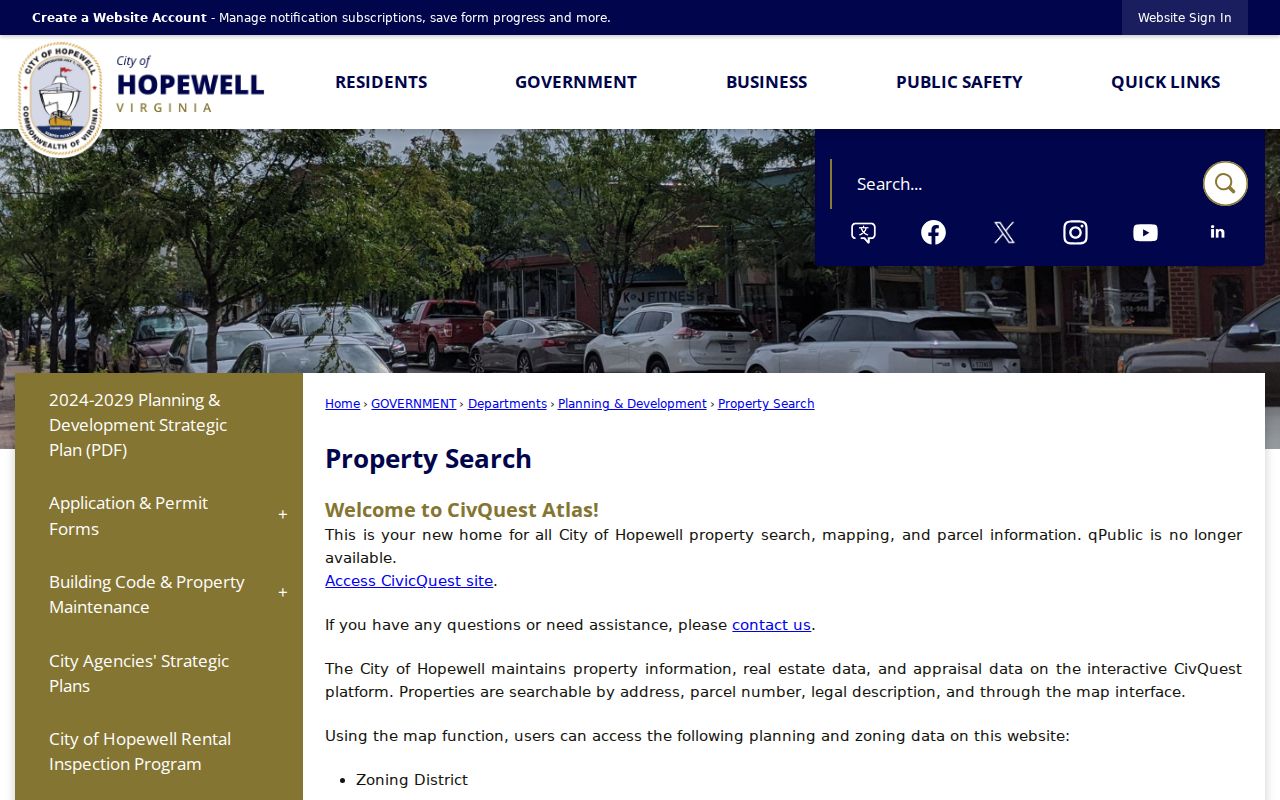
Use that City search page to orient an address or parcel. When exact vesting matters, check the live parcel result against the clerk's recorded instrument.
Verify the Present Owner Against the Recorded Deed
The Hopewell Circuit Court Clerk records deeds and deeds of trust for the independent City of Hopewell. The assessment record locates the parcel. The instrument supplies the conveyance and legal description. Search the clerk's index by the current grantee. Then open the newest deed available and compare the grantee name, the recording date, the parcel description, and any stated manner of holding title. The order matters after a recent transfer: a tax-roll name may lag while the recorded deed already names the new grantee.
- Search CivQuest Atlas by Hopewell street address, parcel number, legal description, or map position and record the parcel reference.
- Use the owner shown in that assessment result as a name to search in the Virginia Statewide Searchable Real Estate Index (SRA), and review the most recent deed entry.
- Compare grantee, recording date, and legal description; do not assume a similar street address describes the same lot.
- If title is held by a business, use the State Corporation Commission’s business entity search to check the entity name and registered agent.
- Owner of record
- The current name attached to the parcel in the assessment roll; it is a starting point for confirmation.
- Vesting
- The form in which a deed transfers title, such as an individual, multiple grantees, trust, or entity.
- Registered agent
- The service contact associated with a Virginia business entity, which is not automatically the property’s occupant or beneficial owner.
Use the Mailing Address for Property Correspondence
Hopewell's tax and assessment systems keep two addresses distinct. One shows where the property sits. The other shows where notices go. If the owner is an individual, that mailing address is the public-record route for ordinary property correspondence. An LLC, corporation, or trust complicates things. The assessment roll may show only the entity rather than the person who manages or benefits from it. Never assume an entity's service address is a private home. Virginia's Address Confidentiality Program shields the actual addresses of eligible participants. A record search should never be used to defeat that protection.
The Virginia State Corporation Commission business-record system can confirm the exact company name recorded on a deed.
Use the SCC record to verify the entity's status and service contact, then route formal property questions through the proper public business channel. The entity search identifies a registered organization; it does not disclose every member or beneficial owner.
Hopewell's Land Book information page describes the yearly owner assessment records and how they are distributed.
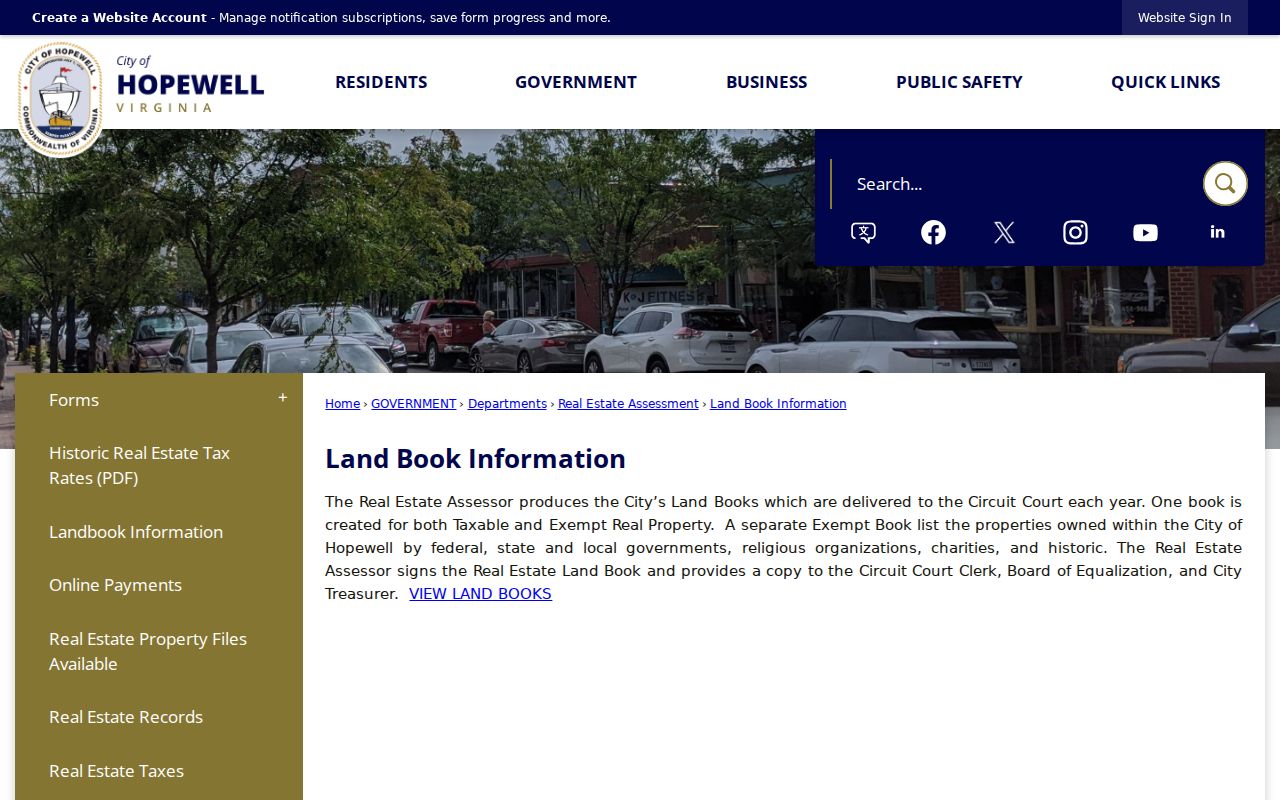
The Land Book is a yearly snapshot, not a live deed feed. Use its year and parcel context when weighing a historical owner name against a present-day record.
The official Hopewell Circuit Court page lists the Clerk's office that records local deeds and related instruments.
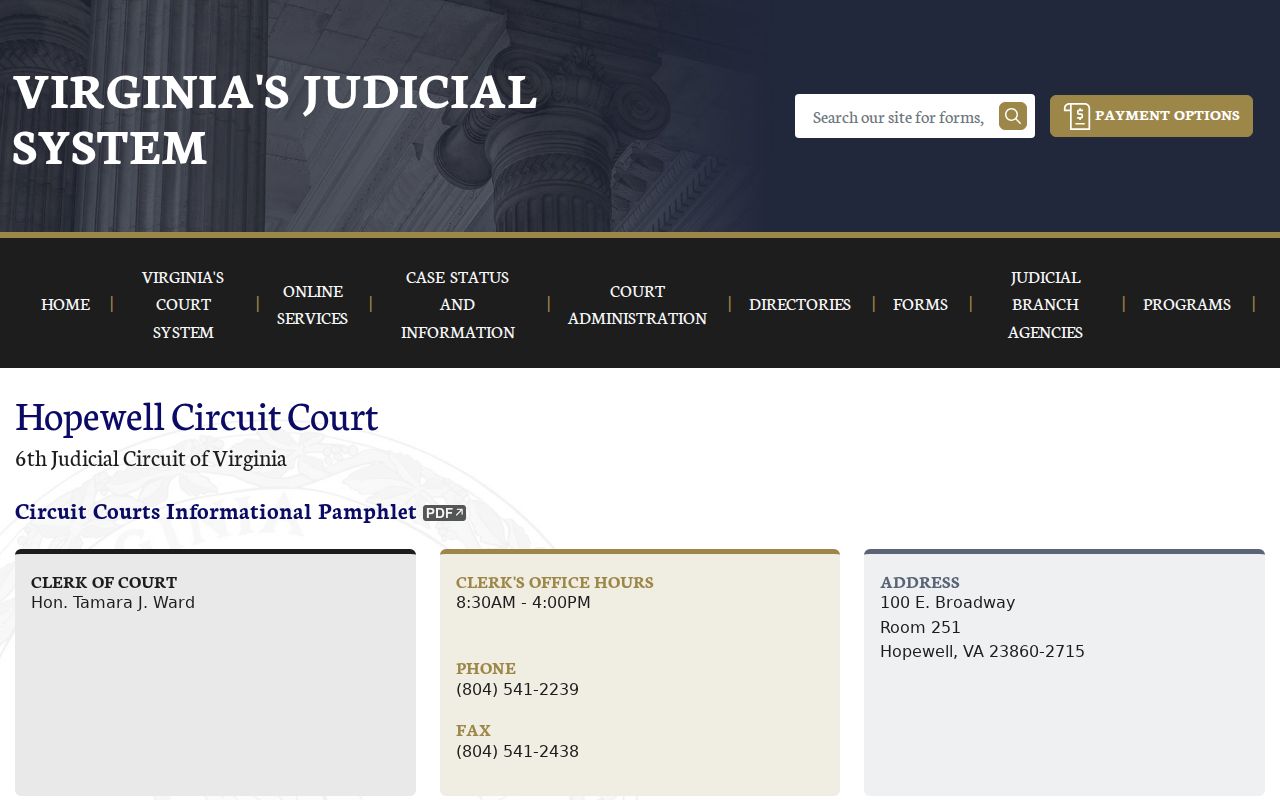
For a question about an instrument, contact the Clerk's recording office directly. Identify the property by deed reference or legal description where possible.
Virginia's VADeed Alert signup page explains its after-recording notice service for matching filings.
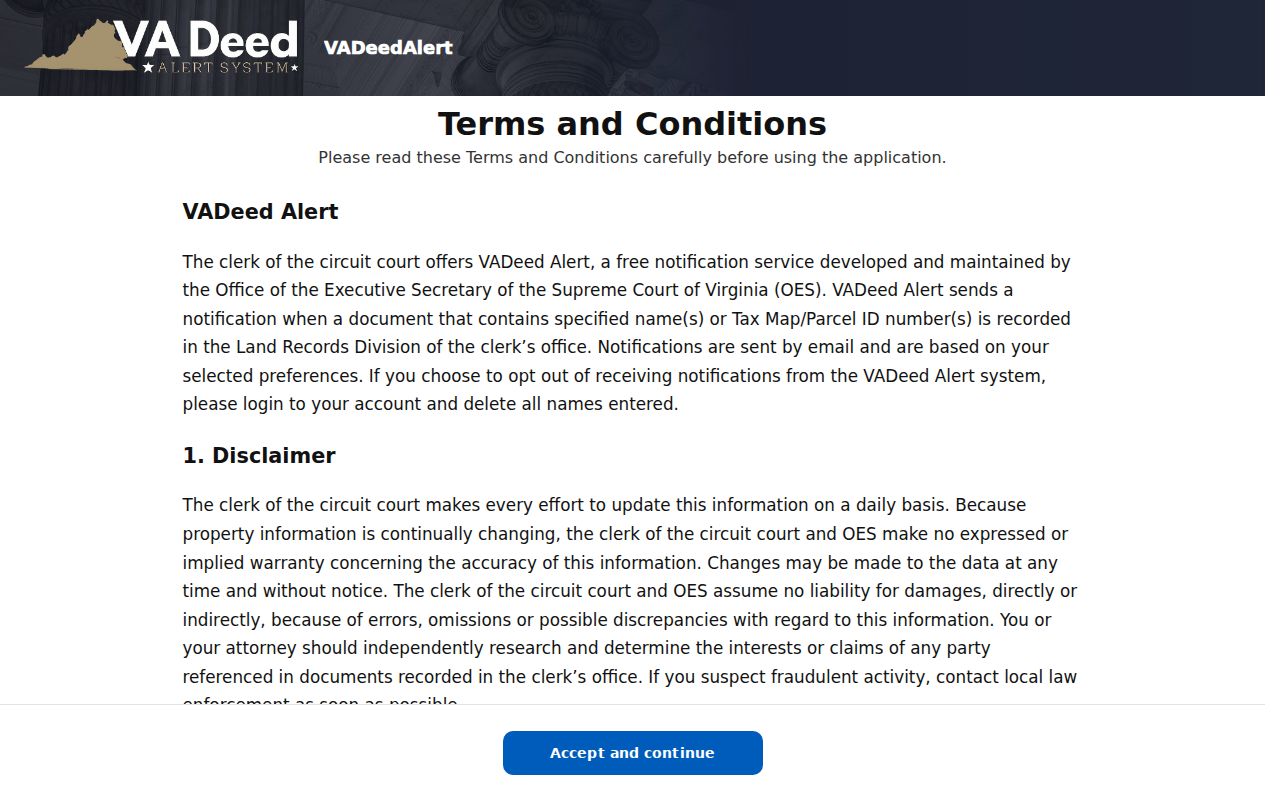
VADeed Alert is a post-recording notification service. It helps monitor later filings, but it cannot stop a deed from being recorded and is not an owner-verification service.
Responsible use. Keep a Hopewell City owner lookup tied to a legitimate property matter, such as a boundary question or a notice about shared maintenance. Do not use an owner name or mailing address to stalk, threaten, or intimidate anyone.
For copies of deeds or a difficult name match, the Hopewell Circuit Court Clerk is at 100 E. Broadway, Room 251, Hopewell, VA 23860, telephone 804-541-2239, with public counter hours listed as 8:30 a.m. to 4 p.m. The SRA index may be free where enabled, while viewing images can require subscription-authorized or paid access. Confirm access and copy charges with the Clerk before traveling.
When the City roll and deed disagree, write down both source dates and compare the legal description. A transfer may not yet appear in an assessment refresh; a correction deed or entity name change can also account for a difference. The City’s biennial assessment cycle is anchored to January 1, 2025, with the next stated date January 1, 2027. That assessment schedule is separate from the Clerk’s recording of an instrument.
For a formal ownership determination, title commitment, or boundary dispute, request the relevant instruments and consult a qualified Virginia title professional or attorney. An online owner name is an index entry, not a legal opinion about every interest that may affect a parcel.
Read a Land Book as a Dated Owner Snapshot
Hopewell's annual taxable and exempt Land Books give a year-specific view of assessment ownership. The City sends these public books to the Clerk, the Board of Equalization, and the Treasurer. Downloadable real-estate property files run from 2018 through 2022. Those dates do not establish the complete historical range. When the current CivQuest name differs from a Land Book, compare the year and the deed date before deciding the record is wrong.
The annual roll and the deed do different jobs. The roll connects an owner name to an assessment year. The deed documents a conveyance. A former name in a prior Land Book is evidence of a past tax record, not proof of the precise date or terms of a transfer.
Distinguish an Entity Owner from a Person
A deed may vest title in an LLC or a corporation. Virginia's State Corporation Commission system can confirm an entity's name, status, and registered agent. The agent, though, is a legal service contact. It is no guarantee of the members, beneficial owners, or occupants. A trust name likewise identifies the title holder exactly as written in the instrument. It does not automatically name every beneficiary.
For entity research, search the exact name shown in the deed. Note the punctuation, suffix, and status. Do not merge a similarly named company with the property owner. Check the official entity details and the deed first. A corporate mailing address may be a service address, not a residence.
Separate a New Recording from a New Assessment
The Clerk records instruments independently of the City's property assessment updates. A newly recorded sale can show a buyer before the public assessment record changes. The City publishes no specific refresh delay for the current CivQuest result. For a recent change, the recording date is the useful clue. Check the deed index. Ask the Clerk about the image. Contact Assessment about when its parcel record will reflect the transfer.
Timing matters most when you prepare a tax payment. It also matters when you send property correspondence or check a closing file. Use the Treasurer's account to confirm who is billed. See whether a payment posted. The tax bill and the recorded owner do not always update at the same moment. Treat each source on its own schedule.
Use Virginia’s Deed Alert for Future Monitoring
Virginia announced VADeed Alert on July 8, 2026. A registrant can receive notice when a later deed recording matches the enrolled name or monitoring details. The service only notifies after recording. It cannot block a fraudulent instrument. It does not establish the current owner. It does not replace review of the Clerk's recorded document.
Anyone monitoring a parcel should still review the instrument itself and contact the recording office if a notice looks unfamiliar. Treat alerts as one part of an ownership-monitoring routine, not as proof that title is protected from every risk.
Request the Underlying Instrument When Needed
Recorded deeds in Hopewell City live with the Circuit Court Clerk. Visit the public counter at 100 E. Broadway, Room 251, Hopewell, Virginia 23860, or call 804-541-2239 during business hours, 8:30 a.m. to 4 p.m. The statewide index may allow free searching where enabled. Pulling document images can require paid or subscription-authorized access. Confirm the copy fee and the correct reference before you travel.
A transfer question calls for the deed itself. Request it by instrument reference. You can also supply the parties, an approximate recording date, and the legal description. A record request should ask for existing documents. The office does not create title opinions.
Make a Narrow Public-Records Request
Virginia FOIA, Va. Code §§ 2.2-3700 through 2.2-3715, opens many existing public records. A public body generally responds within five working days. A seven-workday extension is sometimes allowed. Actual reasonable costs may be charged. The office may request a deposit once estimated fees exceed $200. The law does not require an office to create a record or conduct a new investigation to answer a question.
Ask for the specific parcel card, deed, or dated assessment file you need. The narrower the request, the easier the custodian's job. A focused request also makes any copying charge simpler to estimate, which keeps the property search quick for everyone involved.