
Find a Hopewell Property Owner
CivQuest Atlas is Hopewell's property-search and mapping system. Its public landing page is the natural first stop. Enter the current address. The result shows the parcel number, legal description, and map context for the site. Treat the name on the screen as the assessment owner of record. It is not a title opinion. If the purchase was recent, pull the recorded deed from the Clerk next. The same applies if the name looks off.
- Search the Hopewell address in CivQuest and save the parcel number and legal description.
- Read the owner field if it is shown, noting that exact live result labels were not captured in the public text page.
- Compare the latest deed in Virginia Secure Remote Access or ask the Hopewell Circuit Court Clerk.
- If the name is an LLC or corporation, check the Virginia SCC entity record for its registered details.
Sources Behind Hopewell Owner Records
Ownership details in Hopewell come from several offices, each with its own job. The assessment office keeps owner data and the yearly Land Books. The Clerk handles deeds and related instruments. GIS places a parcel on the map. For a business name, the state SCC can point to the registered agent or filing entity, though the deed remains the true record of who holds title.
| Source | Owner Info It Gives | Access |
|---|---|---|
| Assessment roll | Owner-of-record field and assessment information | CivQuest; exact card labels need live check |
| Recorded deed | Grantor, grantee, and instrument reference | Virginia SRA index; image access may be subscription-gated |
| SCC entity record | Business name, status, registered agent, and filings | Virginia Clerk’s Information System |
| GIS map | Parcel location and surrounding context | Hopewell CivQuest / GIS; map is not a survey |
The assessed owner is not always the occupant or the manager. A mailing address is simply where tax correspondence goes. Situs is where the land sits. Read the two fields as separate clues, not as proof of residency or title.
Hopewell Owner of Record Needs a Live Check
The official assessor page assigns ownership records to the Real Estate Assessment Office. The property-search route runs through CivQuest. It displays an owner-of-record field on the selected parcel card. The live card supplies the exact label, the date, and the supporting details. When a name appears, save the parcel, situs, mailing address, legal description, and assessment year. Hopewell's current property-search landing page confirms the CivQuest route and links to the parcel search.
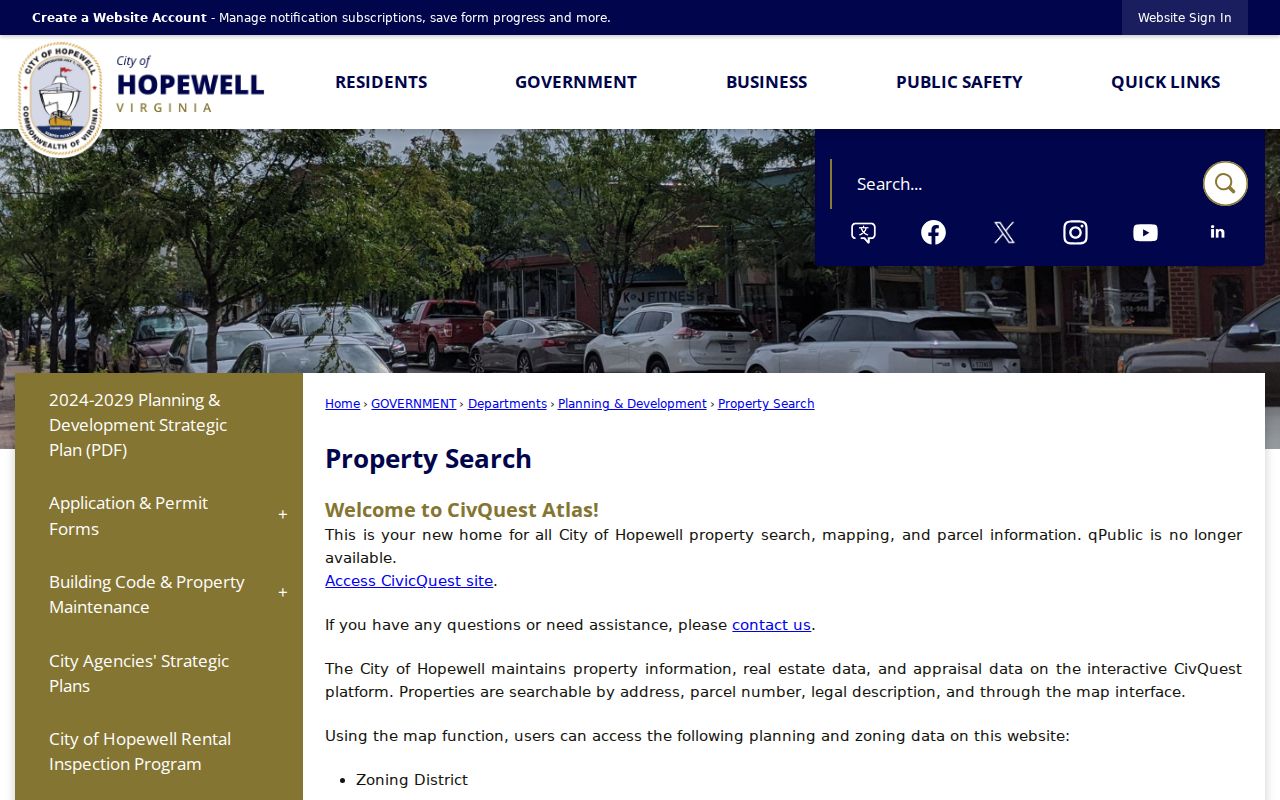
For exact owner-card details, open the live selected parcel and match its legal description against a recorded instrument.
Hopewell Deeds Can Be Newer Than the Roll
Hopewell reassesses on a biennial cycle. The city sets January 1, 2025 as the last assessment. January 1, 2027 is the next. The published source does not say. It gives no rule for how long after a deed recording the owner field changes. A recent closing can show up in the Circuit Clerk's index first. The assessor screen catches it later.
When the owner field and the deed disagree, compare the recording date. Compare the grantor and grantee, parcel reference, and legal description. Do not infer an update period from the reassessment dates. The assessor record still governs current tax administration. The recorded conveyance is the better first source for the most recent transfer.
Bring in a title professional if the question needs a complete ownership opinion. That includes open liens and releases.
Hopewell LLC and Trust Names Need Entity Checks
A parcel may sit in a company name. It could name a trust or an estate instead. The owner of record may not be the person who signs letters or uses the land. Search the exact legal name shown in the deed or assessment entry. For a corporation or LLC, the Virginia SCC business-record system is the official lookup for filings and status. It also lists registered agent and principal office where filed. A registered agent is a filing contact, nothing more. Tie the entity to the deed and legal description. Conclude ownership only after that.
Use the business record to read a name on a deed. Then return to the land record for the transfer itself.
Hopewell Mailing Address Is Not Situs
Situs locates the property. Mailing routes the tax bill. An owner can receive mail anywhere. A legal entity or fiduciary can list its own mailing address. Never read a mailing address as proof of residence, occupancy, or the parcel's jurisdiction.
Hopewell sits beside Prince George and Charles City counties and Fort Lee. A Hopewell mailing city or ZIP does not put the parcel inside the independent city. Confirm the locality in CivQuest, then use that jurisdiction's assessor and Circuit Court Clerk. The main office ZIP is 23860, though cross-boundary and PO-box ZIPs are not catalogued publicly.
If two owner names look alike, compare the parcel number and description. Do not match on the name alone.
Hopewell Land Books Separate Taxable and Exempt Parcels
Each year the assessment office prepares a taxable Land Book. It also prepares a separate exempt Land Book. Hopewell distributes copies to the Circuit Court Clerk, the Board of Equalization, and the Treasurer. That explains why one owner can surface in several offices. Each copy serves a distinct task, and they may not update at the same moment. The city's Land Book information page describes the books. It also covers their distribution as a public reference.
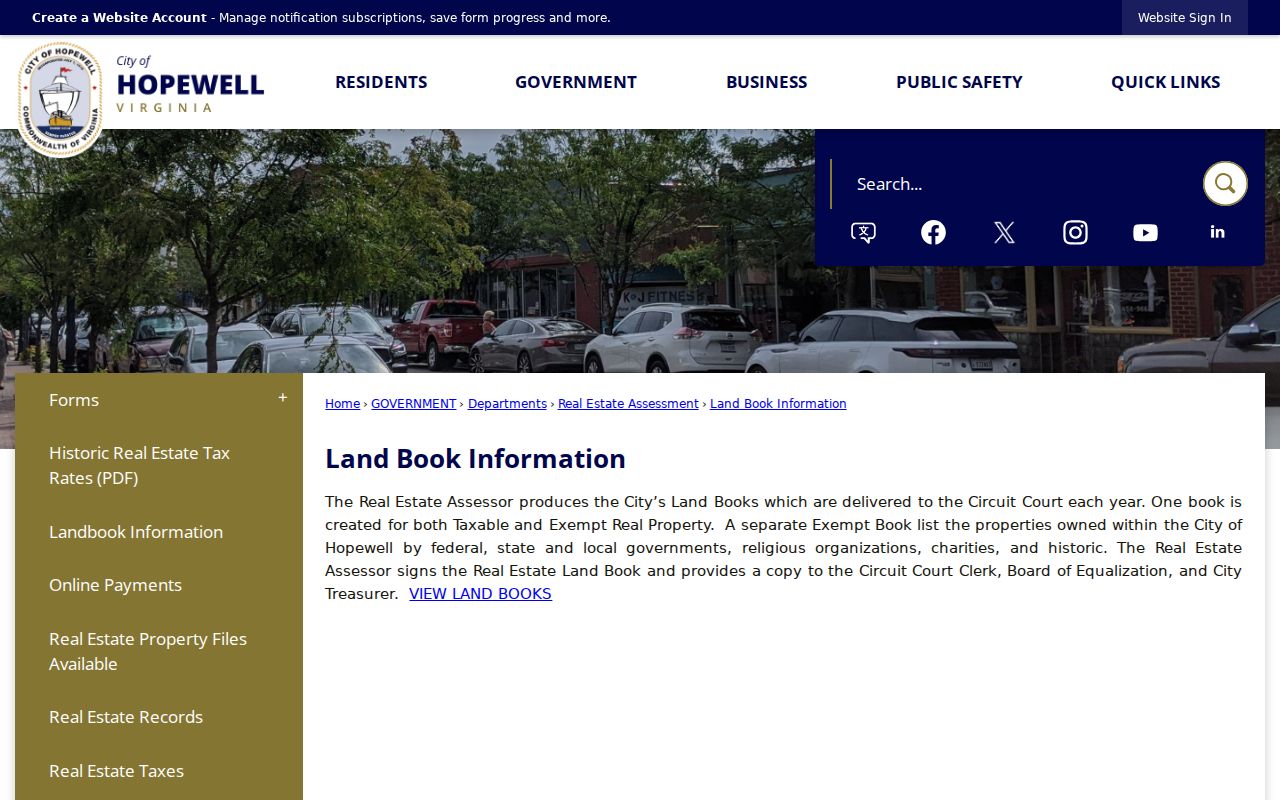
Use the taxable roll for the assessed owner. Consult the deed for the conveyance that put the name in the chain.
Hopewell Owner Research Has Privacy Limits
Virginia runs an Address Confidentiality Program that lets eligible participants use a substitute mailing address. The program's identifying records are protected under Va. Code §2.2-515.2. A court order can shield an address too. None of that changes the deed itself, which stays in the official land record. Still, a public record is not an open invitation. Do not use it to publish sensitive details or to contact someone for an unrelated purpose.
Virginia FOIA opens the door to existing public records, but it also allows exemptions. Hopewell property records follow those rules. For a deed, go through the official Clerk or SRA channel. For an assessor field, contact the assessment office. Ask only for what the property question needs, and follow the custodian's current process.
For a current roll entry, follow the Hopewell current-owner record steps. For a historical chain, work the deed index backward instead of digging into personal details.
Hopewell VADeed Alert Watches a Matching Name
Hopewell announced VADeed Alert in July 2026 as a notification service for property owners. It fires after an instrument is recorded and a name matches. That is all it does. It does not block a filing or vouch for a document's validity. It does not remove a deed. It does not search prior records for a complete title history.
The Virginia Courts signup page walks through the alert process. If an alert arrives, call the Hopewell Clerk through its listed contact route. Then compare the instrument against the official land record yourself.
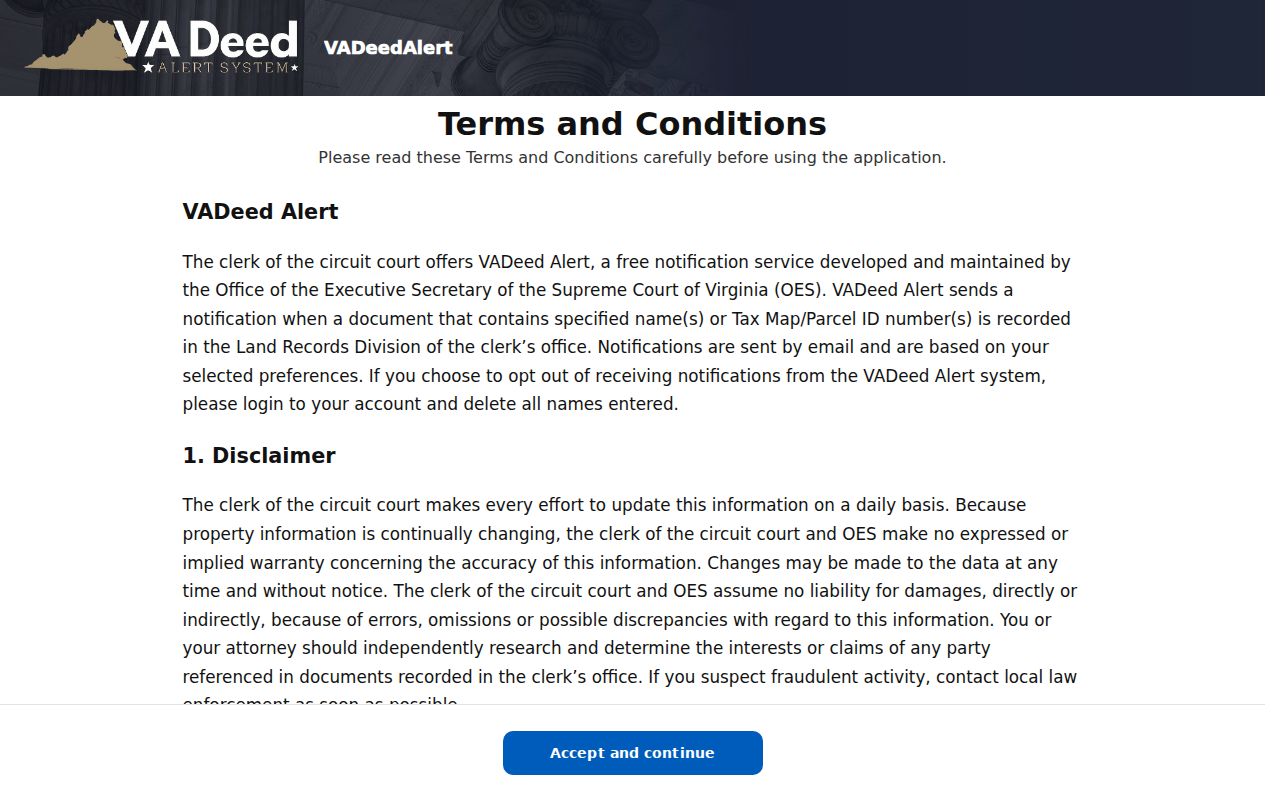
Note: Treat the alert as a prompt to check a filing, never as a substitute for the check.
What an Owner Lookup Cannot Prove
A Hopewell owner lookup answers one narrow question. It can name the assessment owner of record and the recorded grantee. It cannot prove who lives at the site, whether every lien is released, or that the boundary is drawn correctly.
Timing matters too. The assessment cycle is biennial. The city sets January 1, 2025 as the latest reassessment and January 1, 2027 as the next. The roll is not a live closing feed. The recorded deed may be newer than what the roll shows.
Lawful use. Use Hopewell owner records for property research, a purchase review, or a civic question. Do not use a person’s name or mailing address to stalk, harass, or intimidate them.